
By Katie Bodlak ’18
What was your previous position at Fenwick?
 JQ: I started at Fenwick in 1988 as Assistant Dean of Students. I took over as Dean of Students from ‘89-’92. I was Associate Principal for Academics from ‘92-’93 and from ‘93-2009 I was Principal.
What were you most proud of accomplishing in the time?
JQ: Enrollment increased quite a bit during that period and we did some major renovation projects. The new gym, pool, library and annex were built. We also replaced the space that had been the old the pool with computer labs, a wrestling room and a teachers’ lounge. Test scores improved (ACT and SAT) and the number of National Merits increased. We added sports like lacrosse and had a lot of success athletically. Academically we won state and national championships with the JETS and WYSE teams. Our Arts program also grew quite a bit. It was an awesome period to be here.
Where have you been working since Fenwick?
JQ: I served the Archdiocese of Chicago for two years as the Associate Superintendent of Schools. I was responsible for curriculum, instruction, professional development and was the government liaison for the Archdiocese. I went to Washington, D.C. and Springfield as a representative of Catholic schools. After two years of that service, I went back to a school and became the Headmaster of Marmion Academy [in Aurora, IL]. From there I went to DePaul College Prep [formerly Gordon Tech] and was the Principal there for the last five years.
What did you learn at your last few jobs, especially at Marmion and DePaul Prep, that you will apply to Fenwick?
JQ: You know, they had some interesting approaches to education at Marmion. They are really locked into doing certain things a certain way. They are great listeners and they are able to focus well in the classroom, so some of the things that they did there I think would translate well to Fenwick. At DePaul we converted to one-to-one and took some different approaches in the classroom as far as doing more problem-solving activities and group work. I know that Fenwick has been moving along in that regard. I need to get caught up with what has been happening with the Friars. When I was at the Archdiocese, I was doing a lot of research on a lot of different things that can apply to almost anything in the curriculum, so I think we can incorporate some of those things to help.
Why did you decide to return to Fenwick?
JQ: Fenwick is one of the best schools in the country. I have been around a lot and have seen a lot of different things, and it is a very unique place. I think it is very special. They take their tradition of excellence seriously. The students get a great education in the Dominican tradition and really learn to express themselves. I don’t know of any other school that requires speech or four years of a foreign language. Students really learn how to write.
Three of my children graduated from Fenwick and were well prepared for life. I am proud of how successful they have been and how they go out of their way to help others. Fenwick played an important role in their development. They have also made true friends for life. I just want to be a part of a great school.
What is your new position in Student Services going to be?
JQ: I’ll be working down in Student Services with the deans, the counselors and the learning specialists. I’ll also be helping with enrollment and admissions. I use to do a lot of work with admissions at Fenwick, and I did a lot of work with admissions at DePaul. On top of that, I’ll be teaching a A.P. U.S. History course. My first job as a high school teacher was at Lake Forest Academy [Lake Forest, IL] and I began teaching A.P. U.S. History there in 1982. Finally, I will be helping coach [sophomore] football.
What are you looking to bring to Fenwick?
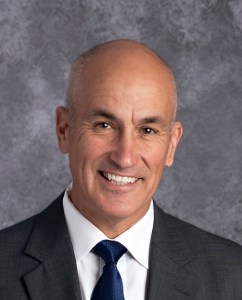
JQ: I really respect the traditions of the school. I understand the history of the school and appreciate the way things are done and why things are done. I was very fortunate to have worked at Fenwick when there were still some people around who actually knew the people who helped found the school. They told me why certain things were done a certain way and what the philosophy behind those approaches were. There are a lot of great people at Fenwick — like Mr. Borsch, Mr. Finnell, Mr. Arellano and Father LaPata — who have been there for many years. They understand that, too. The student’s educational experience at Fenwick will be wonderful when we follow what the original founding father were there to do. I want to help carry on those traditions as much as I possibly can.
Where do you see Fenwick in the next five years?
JQ: I think it has a very bright future with some wonderful plans about many different things. I know they started a Capital Campaign, so within five years I would imagine we would see some of the fruits of that labor.
With Fenwick being more and more plugged in, like with the Class of 2018 being the first class with iPads, how do you think technology at Fenwick will change?
JQ: I’m interested to see where it is going to go. Other countries have not used traditional paperback or hardcover books for years in schools. Around the world, test scores indicate iPads have been used effectively. You gain some skills from using iPads, but there are other things I think are lost as a result from using them. We have to consider what everyone is doing with technology, assess what is working and what is not working, and study the data on it. It is a tool and not the whole driving force within itself.
I can tell you that 20 years ago we were doing a lot of great things with technology at Fenwick, and Fenwick has always been at the forefront of it. Fenwick also has some really talented people working with it.
I think the biggest problem with iPads is just keeping students on task and not getting distracted, because students have so much more of an opportunity to get distracted now than they did before. That’s always been an issue, so it is important that teachers are up and moving around and making classes interesting so the students are really engaged.
With you being at Catholic schools for most of your career, what do you think sets apart a Catholic education, especially at the high school level?
JQ: I really believe in faith-based education. One thing that the Dominicans have always stressed is that learning is accompanied by moral and spiritual growth. Classroom discussions at Fenwick are conducted on a much higher level than at other schools because the theology at Fenwick is strong. Is it moral? Is it the right thing to do? There are not limitations one finds in public schools so you can really get into some heavy issues, which causes you to think at a higher level.
Fenwick students historically have scored high on standardized tests because they are all able to solve problems and think on a higher level. I think they are learning those skills in a Catholic environment. I really do not know of any other school that does it better than Fenwick. I really don’t. Their classes are so solid and they are so tied together with what everyone is doing with each other. You could be discussing the concept of “a just war” in Theology when talking about the Mexican War in history class.
Do you have a favorite memory or tradition at Fenwick?
JQ: I like the Fenwick sense of humor. I could give you a million examples. Many people who attend Fenwick are really clever, and there’s an environment where there is a certain amount of cleverness and humor that I have never seen at any other school. Three of my four children went there, too, so I have great memories of them being there and the great experiences they had there. I see their friends from Fenwick often and there’s a bond that I haven’t seen anywhere else. It’s really a special place.
About the Author
 Before she graduated this past May, Fenwick Broadcasting Club member Katie Bodlak conducted a telephone interview with past-principal Dr. James Quaid, who — before this summer — had not been back at the Oak Park Catholic school in nine years. Ms. Bodlak soon is enrolling as a freshman at Millikin University in Decatur, IL.
 “Lady Bird” won the Golden Globe for Best Film (Musical or Comedy) and is nominated as Best Film at Sunday’s 90
 The priests might be a little eccentric, but they are passionate and caring. The director of the high school musical is a Jesuit who has an emotional breakdown when audiences just do not get his interpretation of “Merrily We Roll Along.” His distress is funny when considered in light of the original production’s New York audiences, who were bewildered by Hal Prince’s first staging of the play. After he falls apart, he is replaced as drama director for Shakespeare’s “Tempest” by a priest who is also the JV football coach. The good father is better at designing offensive football plays than he is at directing a play, so the staging is planned in diagrams of X’s and O’s. Still, the coach-priest brings the same commitment and excitement to iambic pentameter as he does to Friday-night lights.


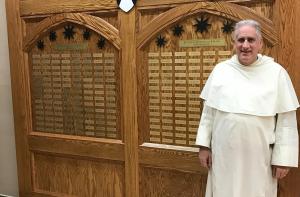 A Class of 1986 alumnus, Fr. Woerter teaches Theology at Fenwick and is the Director of Campus Ministry. Father Dennis (FD) also coaches as an assistant on the sophomore boys’ and junior-varsity girls’ soccer teams. He received a B.A. in speech communication (journalism) from Loras College, a Master of Divinity from the Aquinas Institute of Theology, a M.A. in Theology (Catholic Social Teaching) from the Aquinas Institute and a Doctor of Ministry degree (Preaching in the Practice of Ministry) from the Iliff School of Theology.
 For many years this statement applied to the benefits of Catholic education. A recent book, Lost Classroom, Lost Community by Margaret Brining and Nicole Stelle Garnett, helps to quantify the value of Catholic education to the community. The authors, both of whom are Notre Dame University Law School professors, studied demographic, educational and criminal statistics in Chicago, Philadelphia and Los Angeles. They found a close connection between the presence of a Catholic school and community social capital. This connection can have a positive impact not only on the life of the community as a whole but also on the lives of the individuals within that community.
 The article, written on October 10th, stated that, “21 students were hospitalized for alcohol consumption in the fall semester of last year, 20 students have already been hospitalized in the first half of the fall semester this year.”

 Into this mix of motives, I hope boys and girls are seated here for the main reason why Dominican Friars founded the school: that is, to encounter and learn all about the faith and beliefs of the Catholic Christian community.
 Father LaPata is a 1950 graduate of Fenwick High School.
 Philosophy is the love of wisdom. A philosopher seeks to ask the right question — and not to give the right answer. Philosophy has three principal questions: a) What is real? (metaphysics), b) What is true? (epistemology), and c) What is good? (axiology)
 In the Chicago metropolitan area, we have schools which are examples of all five educational philosophies. The curriculum model of an Idealist-philosophy school is Scholar Academic. The Scholar Academic School trains the next generation of academic discipline scholars – that is chemists, poets, mathematicians, etc. Students are valuable for what they know.
 The Hero is the poor boy or girl made good; the person on horseback who rides into a polis, a city, in the midst of anarchy, a situation in which there is bad government by the many with mob rule and wildness in the streets – a scenario in which nobody’s life, liberty and property are safe. The Hero says, “I know what to do. I have a plan. Follow me.” The Hero inspires the people and leads society to serenity.

 Saint Dominic de Guzman (1170-1221) and his contemporary, St. Francis of Assisi (1182-1226), were 13th century religious innovators. As founders, respectively, of the Dominican and Franciscan Orders, their vision was to bring the good news of the gospel to the urban centers of Europe. The members of their religious communities, known as friars, would be present to the people of God — living and ministering in the same milieu as the people of God.
 The Dominican friars at Fenwick High School continue that ministry of presence first envisioned by St. Dominic. The friars of Fenwick are present to the Fenwick community in all aspects of the “Fenwick experience.” (And, the visible sign of their religious commitment, “the habit,” does indeed help us to stand out in a crowd!) Through our teaching, celebrating the sacraments, coaching, supervising, counseling, and cheering teams on to victory, the Dominican friars bring the good news of the gospel to the Fenwick community.